BookFunnel
- 4.2
- Rating
- 1.00M
- Installs
- Free
- Price

 Analysis by App-foxy
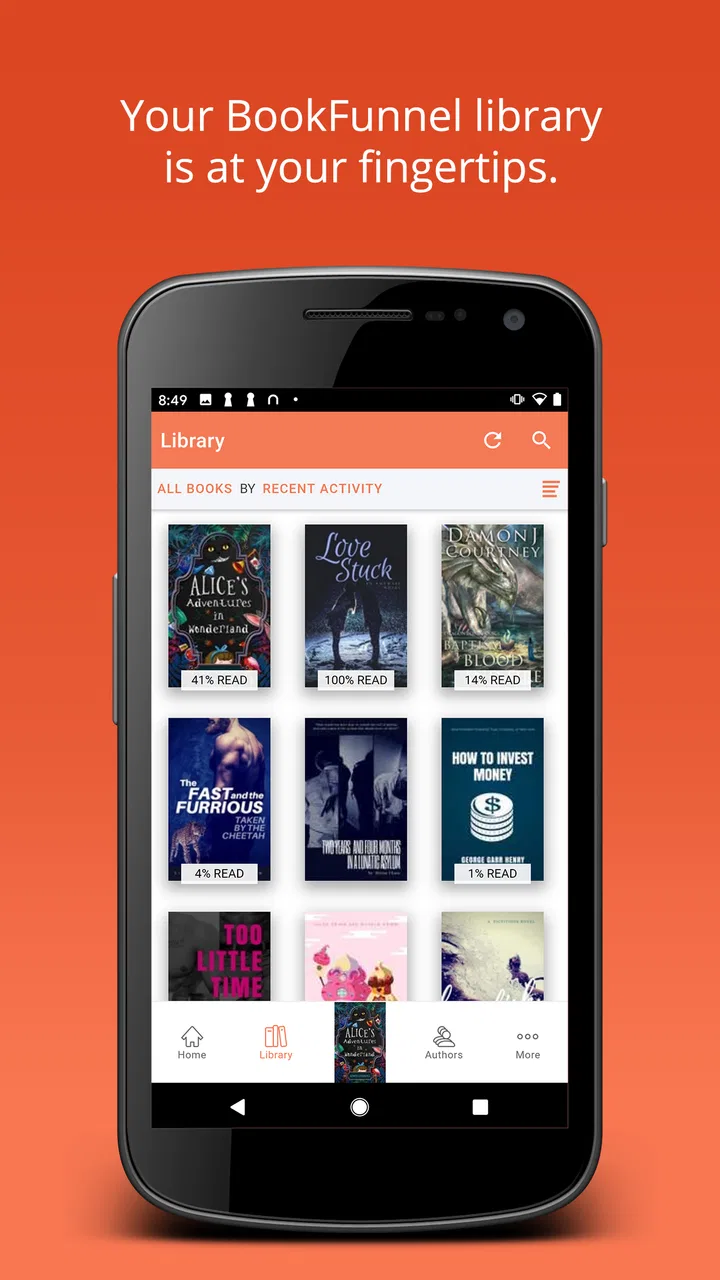
I approached BookFunnel as a reader who already has ebooks scattered across different reading apps and wants a cleaner way to manage them. BookFunnel is a free Books & Reference app from BookFunnel.com, and its main job is practical rather than flashy: it helps me handle books connected with my BookFunnel account and move them into the reading app I prefer. That narrow purpose is also its biggest strength. It does not try to become my entire library, social network, or reading tracker.
After using it, my impression is that this is most useful for readers who regularly receive books through BookFunnel and want less friction between obtaining a title and actually opening it. The experience is especially appealing when I am switching between reading apps or using a phone for one book and another device for a different title. It feels like a bridge in the reading process, not a replacement for a dedicated ebook reader.
How the reading experience feels in everyday use
When I use BookFunnel as a handoff point, the most useful question is not just whether a title opens, but whether it lands in the reader I want to keep using. I’d test one book from start to finish, then settle on a default reading app before moving more titles. That small choice makes the everyday routine clearer and helps me spot whether any friction comes from the transfer or from the reader itself.
You May Also Like

 Blood Strike: 2.5 Anniversary
Blood Strike’s Loadouts Turn Every Drop Into a Tactical Gamble
A close look at Blood Strike’s custom loadouts: how fast access to signature weapons reshapes its battle royale rhythm, rewards preparation, and narrows the gap between fights.

 Pandora - Music & Podcasts
Pandora’s Music Is Easy to Start, but Harder to Recover
Pandora’s strength is its low-effort path from a seed to a station. Its weak spot is how much confidence it asks you to place in connection, setup, and quiet recovery.

 8 Ball Pool
 Is Built on Rivalries, Rematches, and Routine
A close look at the rivalries, rematches, shared routines, and unanswered safety questions that turn a quick pool match into a persistent mobile community.

 Samsung Music
’s Quiet Strength Is Playing What You Already Own
Its reach comes less from spectacle than from dependable access to a personal library. That simplicity is both the app’s strongest retention engine and its ceiling.

 AccuWeather: Weather Radar
AccuWeather Review: A Quick, Clear Forecast for Everyday Decisions
For everyday plans, the best forecast is the one you can understand quickly. AccuWeather makes rain timing, radar, and local conditions easy to act on, with a few trade-offs.

 Hill Climb Racing
Why Hill Climb Racing Still Turns Crashes Into One More Run
A tiny car, a bumpy hill and one more upgrade: Hill Climb Racing keeps resurfacing because its simple chaos makes every near-miss feel personal.
More From Our News Desk



Readable navigation without unnecessary decoration
The app’s purpose is easy to understand: find the books associated with my BookFunnel activity, choose one, and send it to a reading app. That straightforward structure matters for people who do not want to learn a complicated catalog system. I can focus on the title I want instead of sorting through unrelated recommendations, social updates, or shopping features.
For readability, the strongest point is the limited scope. There are fewer competing elements than I would expect from a general-purpose ebook marketplace. A reader who prefers familiar, direct workflows should find the basic idea approachable. The app is also rated for Everyone, which fits its role as a general reading utility rather than an age-specific service.
There is an important distinction, though. BookFunnel helps me manage and deliver books, but the final reading experience depends heavily on the app I choose afterward. Font size, typeface, background color, line spacing, text-to-speech support, screen magnification, and other reading controls belong mainly to that destination app. I would not install this expecting it to provide a full set of reading customization tools itself.
That separation can be helpful for accessibility because I can keep using a reading app whose display settings already suit me. It can also be confusing at first. A user may reasonably expect to open a book and adjust everything inside BookFunnel, only to discover that the important visual controls are handled elsewhere. My practical advice is to decide which reading app works best for your eyes before transferring several books.
A useful workflow for readers with different libraries
One of the less obvious benefits is that the app can reduce the mental load of remembering where a book came from. Instead of searching email messages, downloads, and file folders whenever I want to read a title, I can begin from the BookFunnel side and then pass the book to my chosen reader. This is particularly useful for independent-author books, review copies, or titles received through reader promotions.
In my experience, the best workflow is to keep one preferred reading app for most books and use another only when a particular format or device makes that necessary. BookFunnel then becomes the handoff point. That approach avoids a common problem on mobile devices: downloading a file successfully but forgetting which folder it entered or which app can open it.
It is also worth understanding what this means for organization. The app is not a universal replacement for a file manager or a full ebook library. If most of my books come from unrelated stores and services, BookFunnel will not automatically make that entire collection consistent. Its value is strongest inside the BookFunnel ecosystem, where the source and transfer process are already connected.
Motor and sensory considerations
For users with motor difficulties, a short transfer path can be more comfortable than repeatedly opening menus, copying files, and locating downloads manually. Fewer steps can mean fewer opportunities for an accidental tap or an abandoned setup. The app’s focused purpose works in its favor here, especially when I am moving one book at a time and already know where I want it to go.
Still, I would not describe every part of the process as equally easy for every user. Selecting a destination reading app may require precise tapping, and the handoff can involve Android’s own chooser or another app’s interface. Those screens may not behave consistently across devices. Someone with tremors, limited reach, or difficulty distinguishing small controls should test the complete route with one book before relying on it for a larger collection.
Sensory comfort is similarly dependent on the reading app that receives the book. BookFunnel can help me reach a suitable reader, but it does not turn every destination into a low-glare, high-contrast, large-print environment. If bright screens, dense text, or changing layouts cause discomfort, I would choose the destination app first and confirm that it offers the display options I need.
For readers who use screen readers or other assistive technologies, the sensible approach is to evaluate the whole chain rather than judging only the BookFunnel screen. Account access, book selection, the system handoff, and the final reading app all form one experience. A smooth first screen does not guarantee an equally smooth reading session, and a capable reading app cannot help if the transfer step is difficult to operate.
Situational access: where the app earns its place
A realistic example is an evening commute. I receive a BookFunnel title earlier in the day, but I do not want to read it in a browser or search through messages while standing on a crowded train. With the book already associated with my account, I can use the app as the starting point, send it to my usual reader, and continue from the reading environment I know. The benefit is not dramatic automation; it is avoiding a small but irritating chain of manual tasks at the moment I want to read.
Another useful situation is moving between a phone and a tablet. I may use the phone for quick reading during a break and a larger screen at home. BookFunnel can make the book easier to reach from the account side, while the separate reading app handles the actual display. That division is convenient, but it does not automatically guarantee that my reading position, notes, or highlights will match across devices. Those details depend on the destination reader and its own synchronization behavior.
The app can also suit readers who are not confident with file management. Manually downloading an ebook, locating it, choosing an application, and repeating the process for every title can be intimidating. BookFunnel gives that task a recognizable home. I would recommend it to someone who often asks where a downloaded book went, provided their books are actually coming through BookFunnel.
Situational access also includes interruptions. If I am in a poor-connection area, traveling, or trying to conserve attention, I prefer to prepare books before I need them. The app is more useful as part of that preparation routine than as a tool I discover for the first time in a hurry. I would open it at home, transfer a title, and confirm that it appears correctly in the reading app before leaving.
Where the usual alternatives are better
A general ebook store is a better choice when I want to browse a large commercial catalog, compare editions, purchase a title, and keep everything inside one retailer’s ecosystem. A file manager is more flexible when I need to move documents from many unrelated sources. A dedicated reading app is better when my priority is typography, annotation, progress tracking, or a highly customized display.
BookFunnel sits between those options. It is more convenient than manual file handling for books delivered through its service, but less universal than a file manager. It is more focused than a store, but it does not replace the store’s discovery and purchasing tools. It can lead me to a preferred reader, but it is not the place I would choose for deep reading customization.
This makes the decision fairly clear. If my library is mostly obtained through BookFunnel, the app can remove a recurring annoyance. If I rarely encounter BookFunnel books, installing another management layer may not be worthwhile. The app is not weak because it lacks unrelated features; it is simply designed for a specific part of the reading journey.
Remaining barriers and points of friction
The first barrier is dependence on the surrounding ecosystem. The app’s usefulness is tied to having BookFunnel books to manage. Someone looking for one central shelf for Kindle titles, library loans, PDFs, web articles, and files from several services may find the experience too narrow.
The second is the handoff itself. Sending a book to another reading app sounds simple, but mobile operating systems sometimes present different choices depending on which applications are installed. A reader who is comfortable with these menus will probably adapt quickly. Someone who expects a single button to open every book in exactly the same way may need a little patience during setup.
The third barrier is divided responsibility. When something feels wrong, it may be unclear whether the issue comes from the book delivery step, the device’s file handling, or the selected reading app. That is not necessarily a flaw in BookFunnel, but it does affect troubleshooting. I find it helpful to test one title, identify the exact point where it appears, and only then transfer more books.
There is also a practical organizational trade-off. Sending books into several reading apps can create several separate shelves. That may be useful if each app serves a different purpose, but it can make the overall collection harder to remember. I would avoid transferring everything impulsively. Choosing one default reader and keeping exceptions limited makes the system easier to navigate, especially for users who rely on predictable routines.
Who should use it and who should skip it
I would recommend BookFunnel to readers who receive books through BookFunnel.com, prefer reading in an established app, and want a simpler route from their account to that app. It is also a sensible option for people who find manual ebook downloads confusing or who regularly need to prepare books on more than one mobile device.
I would be more cautious if my main goal is an all-in-one reading platform. Readers who want extensive in-app typography controls, a broad marketplace, detailed reading statistics, or one combined collection from every source should look first at a dedicated reading service or library manager. BookFunnel may still be useful alongside those tools, but it should not be mistaken for a universal replacement.
Its free price makes trying the basic workflow low-risk, and its average rating is 4.2 from around 3.7 thousand ratings, with more than a thousand written reviews. The app has passed the million-install mark, so it is not an obscure experiment, but popularity alone does not change the central question: do my books come through BookFunnel, and do I already have a reading app that suits me?
My inclusive verdict
My final view is positive, with a clear boundary. BookFunnel is a focused bridge that can make ebook delivery more manageable, especially for readers who want to use a familiar reading app rather than handle files manually. Its restrained design supports a straightforward workflow, and that can help users who value predictable navigation or need to reduce unnecessary steps.
At the same time, inclusive access depends on the entire route. The app can simplify book selection and transfer, but the destination reader controls much of the visual and assistive experience. Users with specific needs should check that reader carefully, then test a complete transfer before building their routine around it.
BookFunnel was released in July 2015 and remains a useful specialist tool because it does not try to solve every reading problem. I would recommend it to the right audience rather than to everyone. If BookFunnel is already where my books arrive, it earns a place on my device. If I need a universal library, advanced reading controls, or a single home for books from many services, I would choose a broader alternative and use this app only when its particular handoff is genuinely helpful.
FAQs for BookFunnel
01What is BookFunnel and how does it work?
BookFunnel is an app designed for authors and readers to easily distribute and access eBooks. Authors can upload their books, and readers can download them in various formats suitable for their devices. The app simplifies the process of transferring eBooks to eReaders, smartphones, or tablets, ensuring a seamless reading experience.
02Is BookFunnel compatible with all eReaders and devices?
Yes, BookFunnel supports a wide range of devices, including Kindle, Nook, Kobo, and other popular eReaders. It also works with smartphones and tablets, allowing users to download books in formats such as ePub, Mobi, or PDF. The app ensures compatibility, so you can enjoy your eBooks anywhere.
03Do I need an account to use BookFunnel?
To access books through BookFunnel, you typically need an account, especially as an author. Readers generally receive a download link via email or directly from the author, which doesn’t require an account. However, having an account can enhance the experience by keeping track of downloads and preferences.
04Is BookFunnel free to use for readers and authors?
BookFunnel offers free and paid plans. For readers, downloading books is usually free if the author has provided access. Authors can choose from various subscription tiers based on their needs, including features like landing pages, mailing list integration, and advanced analytics, which may require a fee.
05How secure is my data on BookFunnel?
BookFunnel prioritizes user privacy and data security. The platform uses encryption to protect data during transfers and follows strict privacy policies to ensure your information remains confidential. Users can feel confident that their personal data and book files are handled securely, safeguarding against unauthorized access.
Pros
- User-friendly interface simplifies navigation.
- Seamless integration with e-readers and apps.
- Reliable customer support for troubleshooting.
- Offers a wide variety of book formats.
- Efficient file delivery ensures quick access.
Cons
- Limited customization in library organization.
- Occasional sync issues with certain devices.
- Some features require a premium subscription.
- No built-in reading or annotation tools.
- Lacks social sharing features for book discussions.

BookFunnel
Gallery